The question
Psychological health has become an important topic in recent years. More people are seeking psychotherapy to better understand themselves, their experiences, and the emotions shaped by their childhood. Today, awareness around mental health is growing. Many parents try to help children recognize and express their emotions from an early age.
By teaching children about feelings, they often become more aware of their own as well. In a world shaped by the internet and social media, it’s impossible to fully shield children from technology. What we can do is guide them to use it in a healthy way and remind them that every emotion is valid—and that it’s always okay to talk about how they feel.
Concept
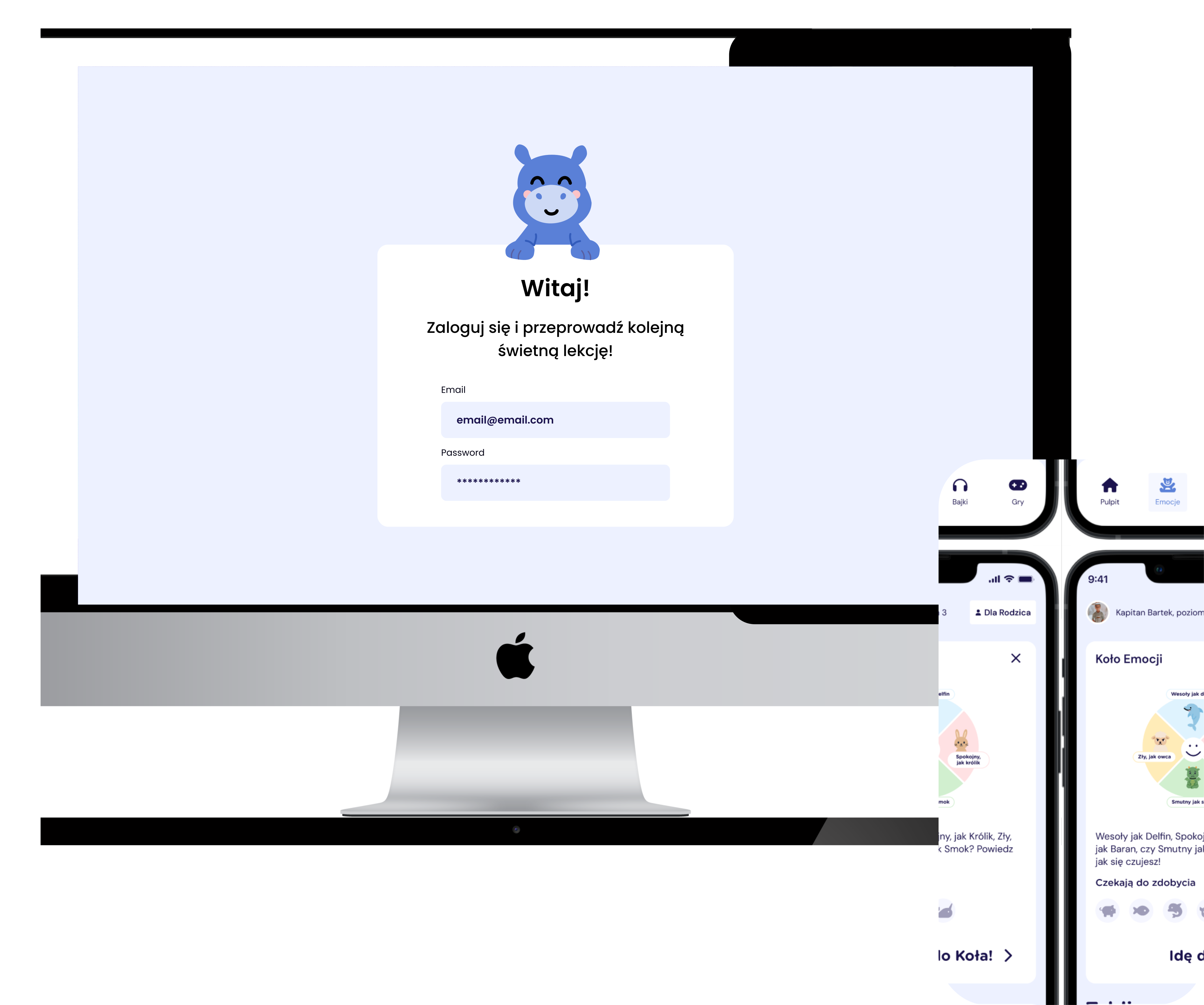
Digital Support (Mobile App)
Acts as an immediate emotional first-aid kit. Using the non-stereotypical ‘Emotion Wheel’ (e.g., Sadness as a Dragon), children can identify and name their feelings in a safe, private digital space.
Physical Connection (Card Game)
Translates digital insights into real-world interactions. The cards encourage screen-free quality time, helping parents facilitate difficult conversations through play.
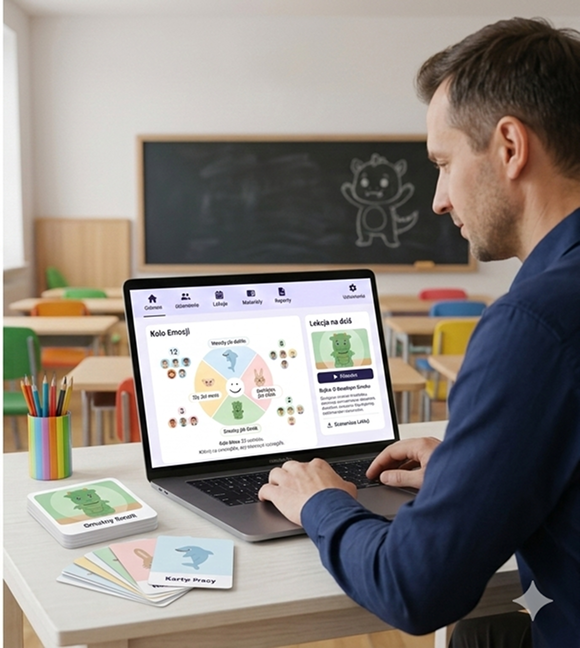
Educational Scalability (Web Portal)
Empowers educators to bring emotional intelligence into the classroom. It provides teachers with tools to conduct group lessons and monitor the general emotional well-being of the class.
For kids, parents and teachers
This project is a holistic emotional toolkit designed to help children articulate their feelings through play and technology. By combining physical cards with a digital app, it creates a safe space for expression. The concept is further extendable to a teacher’s dashboard for classroom use.
A key feature of the design is the use of animal avatars to represent various emotions. To avoid common clichés and broaden emotional perception, I chose unexpected pairings, such as a dragon for sadness and a goat for anger, fostering a more nuanced understanding of a child’s inner world.